Outer body damage
A bent fender or displaced bumper can affect appearance and fit without establishing the condition of the underlying structure. Conversely, an intact-looking panel cannot rule out damage behind it.
A door that binds after an impact, a changed panel gap or a wheel that no longer sits as expected deserves more than a cosmetic assumption. Tell Restart what changed so the affected body and structure can be assessed against the vehicle’s repair requirements.
Start an estimatePanel gaps are clues, not a structural diagnosis or confirmation that a vehicle is safe to drive.

Changed panel fit, wheel position or operation calls for more than a cosmetic photo review. In-person assessment must identify affected components and applicable vehicle-specific repair information before structural work is planned.
Select a part to see where it sits in this simplified structure.
These members run along the vehicle. An impact can affect areas beyond the visible outer panel.
These connect across the vehicle. Their relationship to the rails is part of understanding the affected structure.
These are connection areas between members. The vehicle’s construction and repair procedures determine how a damaged connection is assessed.
Frame and unibody construction differ, but both require identifying what the impact affected beneath or around the exterior panel. A gap alone cannot establish which structural components need work.
A bent fender or displaced bumper can affect appearance and fit without establishing the condition of the underlying structure. Conversely, an intact-looking panel cannot rule out damage behind it.
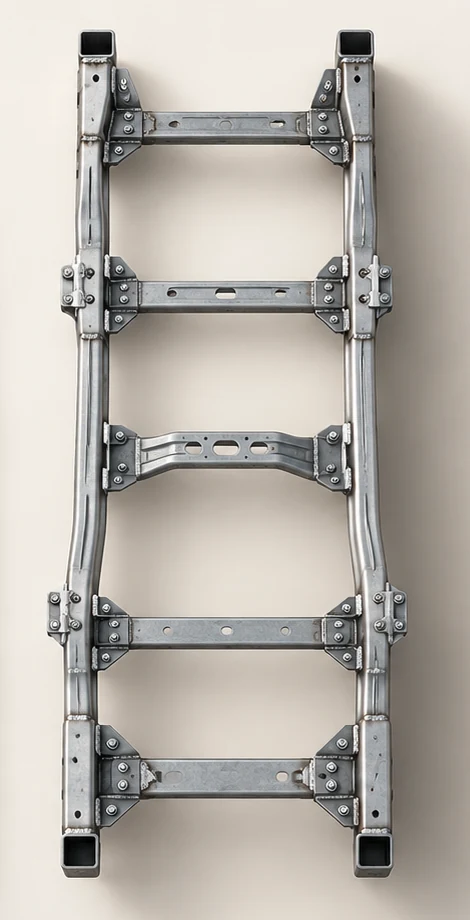
The assessment needs to identify the damaged components, their materials and the applicable repair information. A repair method suitable for one part is not automatically appropriate for another.
Changes in door operation, wheel position or how the vehicle tracks should be reported alongside visible body damage. Describe what changed without test-driving an unsafe vehicle to gather more information.
Ask which components are damaged and what inspection or disassembly is needed to establish their condition. Exterior photographs alone cannot settle that question.
The proposed work should distinguish parts being repaired from parts being replaced. Vehicle-specific repair information matters more than a blanket promise that every bent component can be straightened.
Discuss how related body, paint and system checks fit into the scope. Keep the structural work and its supporting operations visible in the repair documents.
Photos can identify areas of concern, but they cannot establish the complete condition of the structure. A closer assessment is needed before deciding whether structural work is required.
No single visible defect settles that decision. Repairability, the full cost of the proposed work and the vehicle’s value are among the factors considered. For an insurance claim, ask the insurer to explain its determination; we do not promise an outcome before assessment.
No. Wheel alignment and collision damage to a vehicle’s body structure are different issues, even when an impact affects both. Report pulling or uneven wheel position so those concerns are included in the assessment.
Describe the impact location, changed gaps, doors that bind or changes in how the car moves. If you suspect it is unsafe, arrange assistance instead of driving it to the shop.
This starts a preliminary inquiry. It does not confirm repair scope, final price, vehicle acceptance or an appointment.
How your estimate information is handledRestart Collision
North Hollywood, CA is our provisional area context. No visit destination is published. Contact and inspection details are confirmed during manual review; an online request does not reserve an appointment.
Mon–Fri, 8 a.m.–5 p.m. Pacific · Saturday & Sunday closed
Confirm inspection arrangements during review.
Contact guidance